Welcome to Wisefluid
What Is a Cryogenic Hose and How to Choose the Right One
When it comes to safely transferring cryogenic liquids like liquid nitrogen, oxygen, or LNG, the equipment you choose makes all the difference. One essential yet often overlooked component is the cryogenic hose — a flexible, insulated line designed specifically for handling ultra-low temperature gases in liquid form.In this article, we’ll take a closer look at what cryogenic hoses are, where they’re used, and what you should consider when choosing the right one for your system.
Understanding Cryogenic Hoses
Cryogenic hoses are specialized transfer lines engineered to handle fluids at temperatures as low as –196°C (–320°F). Unlike standard industrial hoses, they’re built to withstand thermal contraction, pressure fluctuations, and the risk of embrittlement associated with cryogenic temperatures.
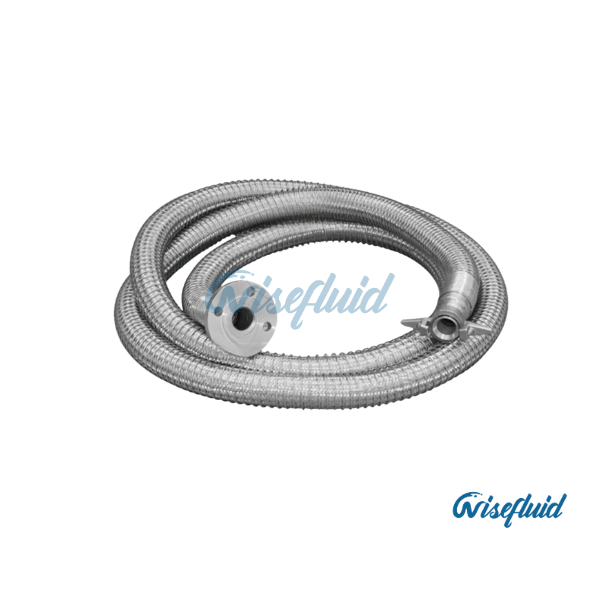
Most cryogenic hoses are made with stainless steel corrugated tubes, often layered with insulation materials like fiberglass, PTFE, or foam to minimize thermal losses. Outer protective covers—like stainless steel braids or rubber jackets—are commonly used to enhance durability in industrial environments.
Where Are Cryogenic Hoses Used?
1. Energy Sector
LNG Refueling Stations: Flexible hoses are used for safe and efficient fueling of LNG-powered ships and vehicles.
Receiving Terminals: Act as auxiliary connectors between LNG carriers and onshore storage tanks during unloading operations.
Tank Truck Transfers: Provide a secure connection for transferring LNG between mobile tankers and fixed storage units.
Vaporization Units: Serve as the pipeline link between liquefied gas storage and ambient or heated vaporizers.
2. Industrial Gas Handling
Bulk Gas Distribution: Designed for the safe transport of cryogenic liquids like liquid nitrogen (-196°C), oxygen (-183°C), and argon (-186°C).
Specialty Gas Applications: Used in systems requiring liquid helium (-269°C) for superconducting equipment, and liquid hydrogen (-253°C) for clean energy development.
Air Separation Units: Connect air separation equipment with cryogenic storage tanks for efficient gas flow.
3. Medical and Research Applications
Medical Equipment: Used in MRI systems for circulating liquid helium to cool superconducting magnets.
Biological Storage: Supply lines for delivering liquid nitrogen to cryogenic bio-storage tanks.
Scientific Facilities: Maintain ultra-low temperatures for particle accelerators and superconducting test setups.
4. Aerospace and Space Exploration
Propellant Filling: Cryogenic hoses handle liquid hydrogen and liquid oxygen fueling for rocket launch systems.
Thermal Simulation: Used in low-temperature wind tunnels and vacuum chambers for aerospace component testing.
5. Food Processing Industry
Flash Freezing Lines: Transfer hoses connect liquid nitrogen tanks to production lines for rapid freezing of food products.
Cold Chain Logistics: Supply cryogenic liquids to portable low-temperature storage units during transport.
Modified Atmosphere Packaging: Deliver inert gases like nitrogen for food preservation and packaging processes.
6. Electronics Manufacturing
Wafer Production: Maintain low-temperature conditions during semiconductor etching and fabrication.
Equipment Cooling: Support temperature control in high-precision instruments like electron microscopes.
Superconducting Systems: Provide cryogenic cooling for quantum computing and other advanced electronics.
7. Specialized Applications
Energy Recovery: Used in boil-off gas (BOG) re-liquefaction systems during LNG transport to minimize loss.
Environmental Engineering: Enable the transport of liquid CO₂ in carbon capture and storage (CCUS) projects.
Green Energy Development: Support hydrogen fueling infrastructure by connecting storage tanks to fueling dispensers.
Not all cryogenic hoses are created equal. The specific design and materials used can have a significant impact on safety, efficiency, and service life. So here are some tips of how to select the right cryogenic hose:
1. Understand the Fluid and Working Conditions
Type of Cryogenic Fluid:
Start by identifying the exact type of cryogenic liquid being transferred — such as LNG, liquid nitrogen, oxygen, argon, hydrogen, helium, or liquid CO₂. Each fluid has unique properties:
Liquid oxygen is highly reactive and must be kept free from oil contamination; hoses require special cleaning and compatible materials.
Liquid hydrogen poses a risk of hydrogen embrittlement in materials.
High-purity gases, like those used in electronics, demand ultra-clean, non-contaminating hose construction.
Operating Temperature:
It’s important to know the lowest working temperature of the fluid (e.g., -196°C for liquid nitrogen, -253°C for liquid hydrogen). The hose must remain flexible and leak-tight at these temperatures without becoming brittle.
Operating Pressure:
Hoses must have a rated maximum working pressure (MWP) that exceeds all possible peak pressures with a safe margin. (Vapor pressure from boil-off gas due to ambient heat ingress. Water hammer effects can cause pressure spikes)
Flow Rate and Hose Size:
Choose the hose diameter based on the desired flow rate. The goal is to minimize pressure drop while maintaining efficiency and cost-effectiveness.
2. Evaluate the Installation and Environmental Conditions
Application Type – Static vs Dynamic:
Cryogenic hoses are used in both fixed (static) and flexible (dynamic) setups:
Static applications (e.g., between storage tanks) have minimal movement and lower flexibility requirements.
Dynamic applications (e.g., truck unloading, fueling arms, ship connections) involve constant motion — bending, stretching, twisting, vibration — and require specially reinforced hoses designed for repeated mechanical stress.
Bend Radius:
Check the minimum bend radius of the hose and ensure that your installation path fits it. Exceeding this limit can damage the inner lining or reinforcement structure.
Length:
Measure the required hose length carefully, and allow extra length to account for thermal expansion and contraction.
Environmental Factors:
Consider exposure to sunlight, ambient temperature, chemicals, mechanical wear (friction, impact), etc. Select an outer protective layer accordingly, such as UV-resistant rubber, polyurethane, or a stainless-steel braided jacket to ensure durability.
3. Critical Construction and Material Selection
Inner Hose (Liner):
The liner is in direct contact with the cryogenic fluid and must be leak-proof and chemically compatible. Here are some common types:
Corrugated stainless steel (316L): Excellent flexibility, cryogenic resistance, and pressure tolerance — suitable for most fluids.
Polymer liners (e.g., PTFE, PFA): Chemically inert and ideal for high-purity or corrosive media, but may need careful design to ensure flexibility and barrier integrity at extremely low temperatures.
Insulation Type:
Vacuum Insulated Pipe (VIP / MLI):
Utilizes high vacuum and multilayer reflective insulation (e.g., aluminum foil + fiberglass paper) between inner and outer hoses. Provides superior thermal performance with minimal BOG losses. It’s suited for long-distance transfer, continuous operation, and costly or volatile gases like LNG, liquid hydrogen, or helium. Higher cost and requires vacuum monitoring over time.
Non-vacuum Insulated Hose:
Uses foam (e.g., polyurethane) or powder insulation. It gives lower cost and lighter weight, but not so efficient. It’s suitable for short-distance transfers or intermittent operations where some evaporation is acceptable (e.g., occasional liquid nitrogen use).
Reinforcement Layer:
This layer gives the hose strength to resist pressure and mechanical stress.
Stainless steel braid or spiral wrap offers the superior pressure resistance, which is ideal for dynamic and high-pressure applications.
Aramid fiber (e.g., Kevlar®) has high strength-to-weight ratio and fatigue resistance ,which is perfect for lightweight, flexible use cases.
Polyester fiber braid is more economical and suitable for low-pressure static conditions.
End Connections:
Ends must match your system and provide secure, leak-tight connections. Stainless steel is commonly used. Types include flanged, threaded, or quick-coupling clamps. Choose the right fitting for ease of installation and reliability. Always follow strict installation procedures to ensure safe operation.
Final Thoughts
Choosing the right cryogenic hose isn’t just about specs on a sheet, it’s about ensuring safety, performance, and peace of mind. With proper selection and maintenance, a quality cryogenic hose can last for years, even under demanding conditions. If you're unsure what fits your system best, our technical team is always ready to help you with selection, customization, or application advice. Feel free to reach out for a quote or consultation.