Welcome to Wisefluid
Propane Gas Manifold vs. LPG Gas Manifold: What’s the Difference and Why It Matters
"Propane gas manifold" and "LPG gas manifold" are widely used in various areas. While they may sound similar and are sometimes used interchangeably, they are not exactly the same. Understanding the differences and applications of these two types of gas manifolds is important when choosing the right equipment for your business.
In this article, we’ll introduce what propane and LPG manifolds are, how they work, their differences, and how to select the right gas manifold system for your needs.
1.What Is a Gas Manifold?
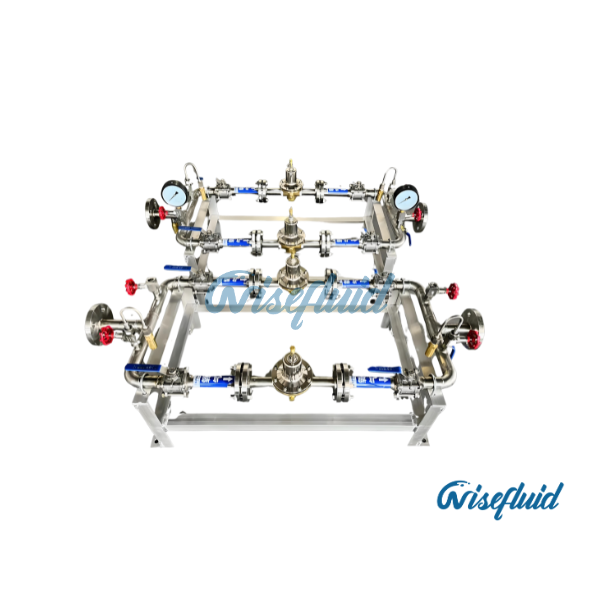
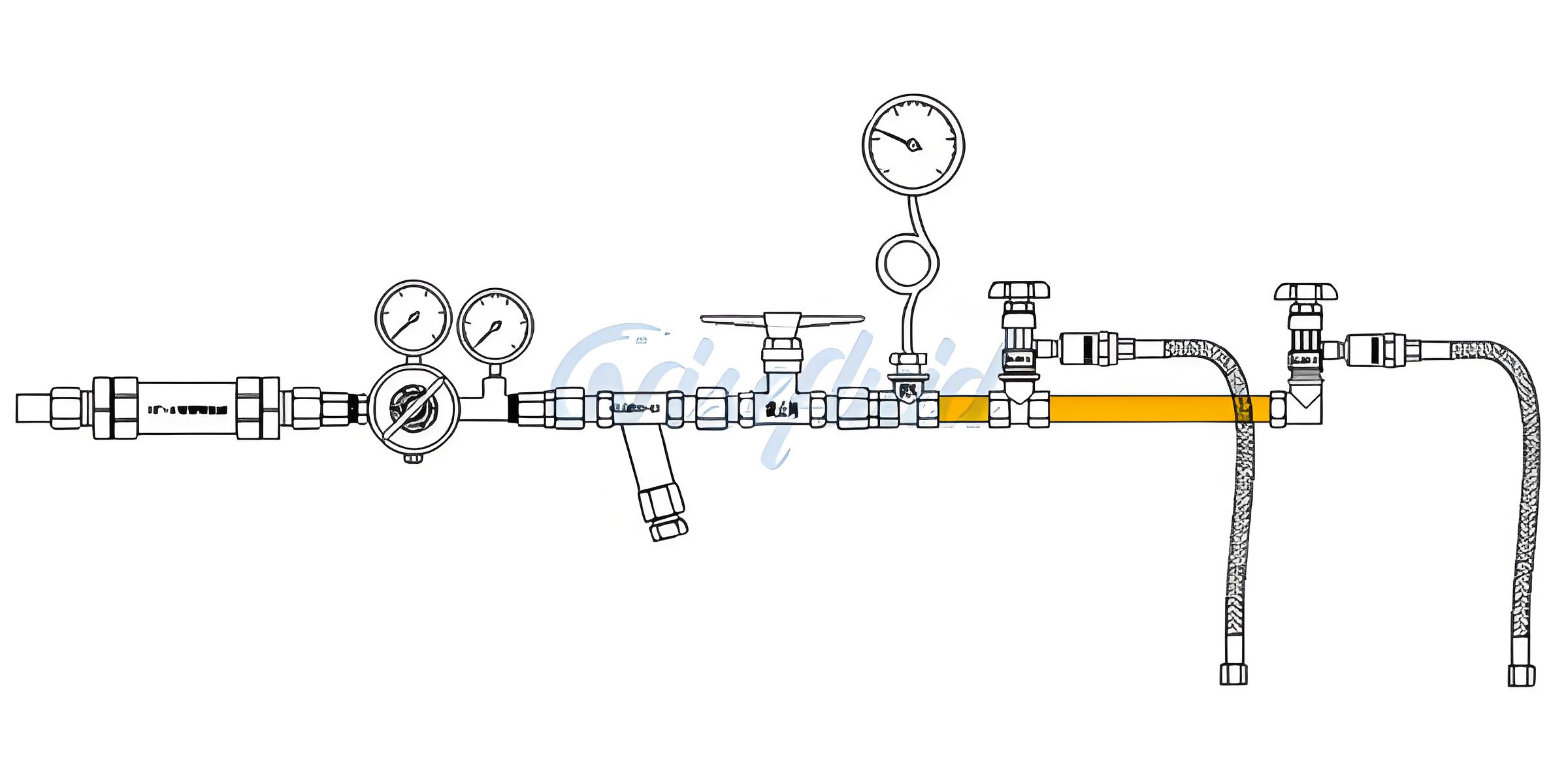
A gas manifold is a system that connects two or more gas cylinders (bottles) into a single supply line. This allows for:
Continuous gas flow even when one bottle is empty
Easier control of gas distribution
Safer operation through pressure regulation and leak protection
Manifolds are widely used in both residential and industrial environments, such as in restaurants, factories, hospitals, laboratories, and more.
2.What Is Propane and How Is It Different from LPG?
Propane is a type of liquefied petroleum gas (LPG), but not all LPG is propane.
Propane (C₃H₈) is a pure hydrocarbon gas, commonly used for heating, cooking, metalworking, and forklifts. It performs well in colder climates because it vaporizes easily at low temperatures.
LPG (Liquefied Petroleum Gas) is a broader term that includes a mixture of propane and butane (C₄H₁₀). The ratio of propane and butane in LPG varies by region. For example:
In cold countries, LPG contains more propane.
In warmer countries, butane is often added because it is cheaper and works well in higher temperatures.
So, when someone says “LPG gas manifold”, they're usually referring to a system compatible with different gas mixes, not just pure propane.
3. Structural Differences Between Propane and LPG Gas Manifolds
Main body Material Selection
Propane Manifolds Preferred Materials:
Stainless Steel (304/316): For high-purity propane applications, 304 stainless steel is generally sufficient, especially if sulfur content is low.
Brass (in low-sulfur environments): Can be used in short-term or low-pressure applications, but only if the gas contains minimal sulfur to prevent corrosion.
Carbon Steel: May be used when propane purity is high and sulfur content is very low. However, carbon steel must be galvanized or coated and requires regular maintenance.
LPG Manifolds Stricter Material Requirements:
Stainless Steel (316 preferred): LPG often contains sulfur compounds, moisture, and other corrosive elements. 316 stainless steel offers superior resistance to sulfide-induced corrosion.
Brass is Prohibited: Due to the higher sulfur content in LPG, brass components are typically banned, as sulfur reacts with copper to form copper sulfide, which causes embrittlement and failure.
Carbon Steel Restrictions: Only allowed when double-protected with galvanization and epoxy coatings. Even then, frequent inspections are necessary. Some national standards prohibit carbon steel entirely in LPG systems.
Sealing Material Differences
Propane Manifolds Sealing Materials:
FKM (Fluoroelastomer): Suitable for propane and can tolerate small amounts of sulfur compounds.
PTFE (Polytetrafluoroethylene): Commonly used for high-pressure seals, often paired with elastomers to improve flexibility and sealing performance.
LPG Manifolds Tighter Sealing Requirements:
FFKM (Perfluoroelastomer): Offers superior chemical resistance, making it ideal for LPG environments with higher levels of corrosive impurities.
PTFE + Metal Composite Seals: In high-pressure applications, composite sealing structures are recommended to prevent sulfur compound permeation.
Prohibited Materials: Nitrile rubber and similar compounds are not allowed due to their tendency to swell or degrade when exposed to LPG.
Safety Devices
Propane Gas Manifold:
Because propane has a higher vapor pressure, the system must be equipped with high-pressure relief valves, over-flow protection, and regulators that can withstand pressures exceeding 10 bar.
LPG Gas Manifold:
These may incorporate multi-stage pressure regulators due to the varied vaporization characteristics of mixed gases. In cold climates, butane’s low vaporization efficiency requires provisions for residual liquid removal or heating mechanisms.
Gasification Support
Propane Gas Manifold:
Propane vaporizes efficiently at ambient temperatures, making extra vaporizers unnecessary unless high flow rates are required.
LPG Gas Manifold:
In regions with low temperatures, a high butane content can cause vaporization issues. Thus, electric vaporizers and heating modules, or temperature control systems should be integrated into the system.
4. Working Principle: Propane vs LPG Gas Manifolds
Gas Supply Method
Propane:
Inside the cylinder, propane exists in a liquid state and evaporates using its own vapor pressure. After pressure reduction, it is delivered as a gas. The flow rate is stable at normal temperatures.
LPG:
As a gas mixture, LPG’s vaporization behavior is less predictable. If butane content is high, it may not gasify effectively below 0°C. This requires forced vaporization or a buffer tank to balance pressure between components.
Pressure Regulation
Propane Gas Manifold:
The regulator must tolerate large pressure swings, particularly in hot climates. A single-stage pressure regulator with a wide adjustment range is often used.
LPG Gas Manifold:
A two-stage regulator is preferred — one at the cylinder group to reduce pressure to medium range, and a second at the equipment side to reach working pressure, ensuring stable output despite fluctuating vapor pressures.
Residual Liquid Handling
Propane:
Pure propane vaporizes completely under normal conditions, so residual liquid is minimal.
LPG:
Butane may remain as liquid in low temperatures. Therefore, drainage systems, residual recovery piping, or cylinder replacement alerts may be needed in the LPG gas manifold design.
5. Application Scenarios
Propane Gas Manifolds:
Ideal for industrial cutting, welding, and chemical supply, where high-purity propane and high flame temperatures are required. Most suitable for warm environments where propane vaporizes easily.
LPG Gas Manifolds:
Commonly used in commercial kitchens, residential buildings, and automotive fuel systems. Their design must accommodate varied propane-butane ratios and offer high safety performance across diverse environmental conditions.
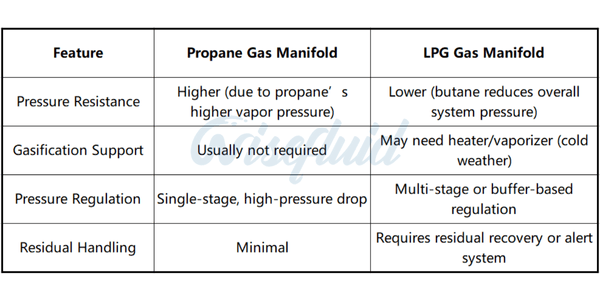
6. Design Summary Table
7. How to Choose the Right Gas Manifold System
Choose a Propane Gas Manifold if:
You require high-purity propane, operate in low-temperature environments, and need high pressure or stable industrial flames.
Choose an LPG Gas Manifold if:
Your application uses LPG mixtures, such as for kitchen use, central gas systems, or in warm regions. Otherwise you need a system designed for stable and safe operation if you use it in low temperatures.
By understanding the key differences between a propane gas manifold and an LPG gas manifold, you can better match your gas system with your operational needs and safety standards. Whether you’re building an industrial system or installing commercial LPG distribution, choosing the right manifold ensures long-term performance and peace of mind.
Looking for high-quality propane or LPG gas manifolds?
Contact us today for free technical consultation and quotations!