Welcome to Wisefluid
Applications of Pressure Reduction Skids
Introduction
Controlling gas pressure is essential to ensure safety, efficiency, and system stability。
A Pressure Reduction Skid, also known as a skid-mounted gas pressure regulating system, plays a critical role in managing high-pressure gases across many industries. In this article, we’ll mainly discuss applications of these units.
What Is a Pressure Reduction Skid?
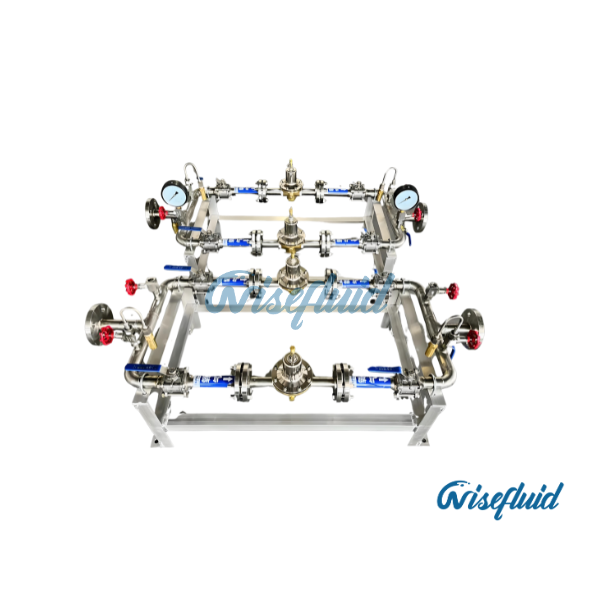
A Pressure Reduction Skid is a modular equipment package that reduces high-pressure gases (from tanks or pipelines) to controlled, safe levels for downstream use. These skids are fully integrated with regulators, filters, valves, gauges, and safety devices, all mounted on a single steel frame for easy transport and installation.
They’re used in systems that handle gases such as:
Oxygen (O₂)
Nitrogen (N₂)
Hydrogen (H₂)
Natural Gas (LNG/CNG)
Argon, Helium, Carbon Dioxide
Common Applications
1. Natural Gas Infrastructure
Long-Distance Pipeline Pressure Control
In transmission networks, gas often travels under very high pressure (above 10 MPa). Skid-mounted regulators are installed to step down the pressure for local distribution or industrial consumption (e.g., to 0.4 MPa or less), ensuring safe delivery and flow stability.
City Gate and Utility Stations
At urban gate stations, these units reduce incoming pressure from national or regional pipelines, meter the flow, add odorant, and feed the gas into municipal networks.
Industrial End-Users
Industries using gas-fired equipment like boilers or turbines rely on these systems to maintain pressure levels within the required operational range, preventing performance or safety issues.
2. Industrial Gas Applications
Chemical and Petrochemical Plants
High-pressure gases (e.g., hydrogen, oxygen) are commonly used in reactors and production processes. Modular pressure control systems help adjust these to working pressures between 0.1–5 MPa.
Metallurgy and Steel Production
Gas such as blast furnace or coke oven gas is stabilized through regulation skids, enabling consistent fuel supply for heating and treatment processes.
Food and Pharmaceutical Facilities
Clean air or nitrogen is regulated for packaging, automation, or cleanroom environments, meeting both safety and hygiene requirements.
3. Energy and Power Generation
Gas-Fired Power Stations
Turbines used in power plants often require precise gas pressures (e.g., 2–5 MPa). Regulation equipment ensures consistency for optimal combustion and power output.
Distributed Energy Systems
In localized CHP (Combined Heat and Power) setups, these units tailor the gas pressure to fit the needs of on-site generators or heating systems.
LNG Regasification
After vaporizing liquefied natural gas, gas remains at elevated pressure. It must be adjusted using specialized skids to fit pipeline specifications or consumer demands (e.g., 0.1–1.6 MPa).
4. Oil and Gas Field Operations
Wellhead Gas Management
Gas from oil and gas wells typically emerges at very high pressure. Skid units are used to bring the pressure down for easier transportation or further processing.
Shale Gas Handling
Similar systems are deployed to stabilize output from shale wells before it enters collection or treatment lines.
Flare Safety Systems
In emergency conditions at refineries or petrochemical plants, excess gas must be safely vented. Skids help reduce pressure before the gas is flared, preventing dangerous overpressure.
5. Building and Utility Networks
High-Rise Gas Distribution
When city pipelines feed tall buildings, pressure must be reduced to indoor-safe levels (e.g., 3–5 kPa) to prevent hazards for residents.
Centralized Compressed Air Systems
In large facilities, these systems manage air pressure for HVAC controls or pneumatic tools, ensuring reliable operation.
6. Temporary or Emergency Supply
Disaster Relief and Emergency Deployment
Mobile units can quickly establish temporary gas supply systems during outages or natural disasters, restoring services in affected zones.
Equipment Commissioning and Testing
During plant startup or maintenance, these systems help simulate operational pressures, check for leaks, or ensure proper system calibration.
Why Choose Us as Your Manufacturer in China
With over 12 years of experience in industrial gas systems, we specialize in OEM and ODM solutions for gas equipment, including pressure reduction skids.
Why Global Clients Trust Us:
In-house manufacturing and engineering team
Certified with ISO9001 and CE standards
Exported to Europe, Americas, Southeast Asia,and the Middle East
Flexible designs and short delivery times
Whether you’re building a new gas supply station or upgrading an existing one, our skid systems are designed for safety, precision, and long-term performance.
Conclusion
A well-designed pressure reduction skid ensures safe, consistent, and cost-effective gas delivery in demanding environments. By understanding how these systems work and what options are available, you can make an informed decision for your next project.
Contact our engineering team for a free consultation and quote.